
Choosing the best pulse oximeters for pets can help veterinarians and trained pet owners monitor important vital signs, including blood oxygen saturation (SpO₂) and pulse rate. These devices can provide useful supplementary information when caring for dogs, cats and other small animals, particularly when monitoring is recommended by a veterinarian. Understanding their features, accuracy, comfort, and ease of use can help you select a suitable device for your pet’s monitoring needs.
What Is a Pulse Oximeter for Pets?
A pet pulse oximeter is a non-invasive monitoring device designed to estimate the percentage of oxygen carried by hemoglobin in an animal’s blood, known as oxygen saturation (SpO₂) and measure its pulse rate.
Unlike some human pulse oximeters, veterinary models may accommodate different animal sizes and measurement sites. A pulse oximeter provides an estimate rather than a complete assessment of an animal’s respiratory or cardiovascular health.
What to Consider Before Buying a Pulse Oximeter for Pets
Choosing a suitable veterinary pulse oximeter involves considering the animal’s size, intended use, device features, and ease of obtaining reliable readings.
-
Accuracy and Reliability
Look for a device intended for veterinary use, with clear information about its measurement performance and limitations. Do not rely solely on advertised accuracy claims. Readings may be unreliable when an animal is moving, cold, poorly perfused, or distressed.
-
Probe Type and Compatibility
Probe compatibility is particularly important because pets differ in size, anatomy, and coat or skin characteristics. Some devices use tongue probes, while others may support probes for the ear, paw, or other appropriate sites. Confirm that the probe is suitable for your pet’s species, size, and intended measurement location.
-
Supported Animal Types
Check whether the device is intended for dogs, cats, or other small animals. A probe suitable for a large dog may not fit a cat or a smaller animal comfortably. Choose a model with clear species and size guidance.
-
Display and Ease of Use
A clear display can make readings easier to view, especially in a veterinary setting. Consider screen size, readability, control layout, and whether the device provides useful indicators when the signal is weak or the reading is unreliable.
-
Bluetooth and Data Storage
Some veterinary pulse oximeters offer Bluetooth connectivity and mobile applications for storing or reviewing readings. These features may be useful for monitoring trends and sharing information with a veterinarian. Check smartphone compatibility, app availability, data export options, and whether any functions require a subscription.
-
Portability and Battery Life
A lightweight, handheld device may be convenient for clinics, home visits, or home monitoring under veterinary direction. Consider battery type, charging requirements, battery life, and whether the device can be used while connected to a power source.
-
Comfort and Safety
The probe should fit appropriately and be used without causing pain, excessive pressure, or distress. Consider how easily it can be positioned and whether your pet is likely to tolerate the measurement site.
-
Build Quality and Maintenance
Choose a device that is durable enough for its intended environment and has clear cleaning instructions. Check whether probes, cables, batteries, or other accessories can be replaced and whether the manufacturer provides technical support.
-
Price and Warranty
Compare the cost of the device with its included probes, accessories, app features, warranty, and availability of replacement parts. A lower-priced model may not meet the needs of a veterinary clinic or a pet requiring ongoing monitoring.
Best Pulse Oximeters For Pets
1. BERRY Veterinary Pulse Oximeter for Dogs and Cats – Bluetooth Pet Heart Rate Monitor
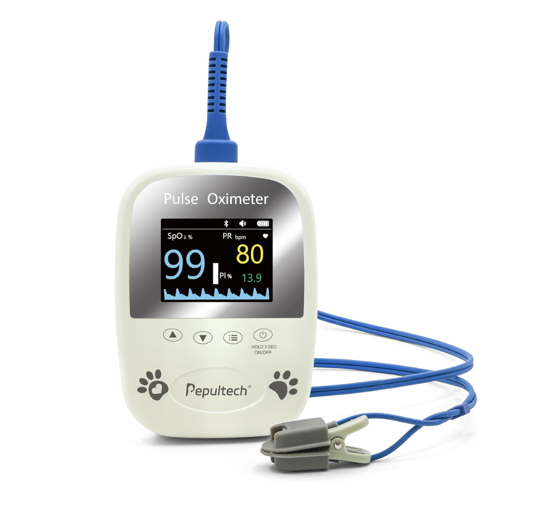
The Berry Veterinary Pulse Oximeter for Dogs and Cats is designed to help monitor a pet’s blood oxygen saturation (SpO₂) and pulse rate.
Key Features
- Weighs 14.1 ounces
- AA batteries
- Audible and visual alarm
- Automatic power down
- Measures 1″L x 1″W x 1″H
- Measures blood oxygen saturation (SpO₂) and pulse rate.
- Bluetooth connectivity
- APP data analysis and preservation.
Pros
- Designed specifically for veterinary applications.
- Monitors both oxygen saturation and pulse rate.
- Bluetooth connectivity may make it easier to view or record readings.
- Useful as a supplementary monitoring tool in appropriate settings.
- Provides additional vital-sign information to support veterinary assessment.
- Light in weight and convenient in carrying
Cons
- Accurate readings may be difficult to obtain if the pet moves.
- Proper probe placement and animal-specific use are important.
This model may interest pet owners, veterinary students, and clinic staff looking for a Bluetooth-enabled monitoring device.
2. ChoiceMMed Handheld Pulse Oximeter for Veterinary Use
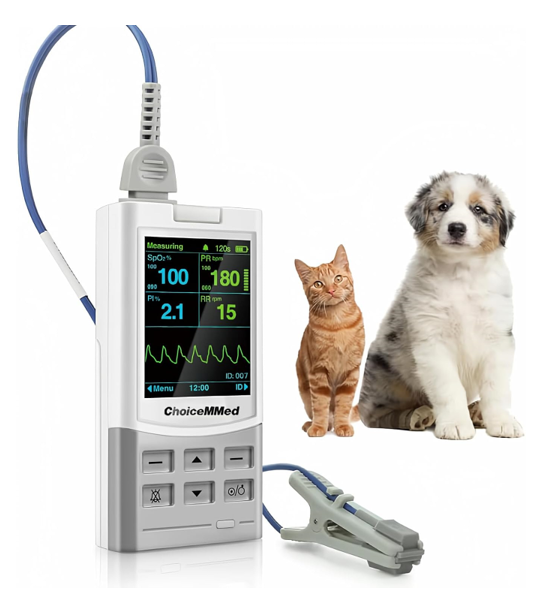
The ChoiceMMed Handheld Pulse Oximeter for Veterinary Use is a portable monitoring device designed to measure oxygen saturation and heart rate in dogs, cats, and small animals.
Key Features
- Weighs 1.06 pounds
- Handheld format
- 3 AAA batteries
- One-button operation
- Clear LED display
- Measures blood oxygen saturation (SpO₂).
- Monitors heart rate in suitable animal patients.
Pros
- It is easy to use
- Portable and convenient for veterinary settings.
- It is suitable for use on a wide range of animals
- Provides two useful vital-sign measurements.
- Suitable for different types of small animal patients
- May support routine observation and clinical monitoring.
Cons
- Readings can be affected by movement, poor circulation, and probe positioning.
- Requires appropriate interpretation by a trained user.
The ChoiceMMed handheld veterinary pulse oximeter may be worth considering for veterinary professionals and trained animal-care providers who need a portable monitoring device.
3. AM6200A Bluetooth Veterinary Patient Monitor – SpO₂, Blood Pressure, and Pulse Rate
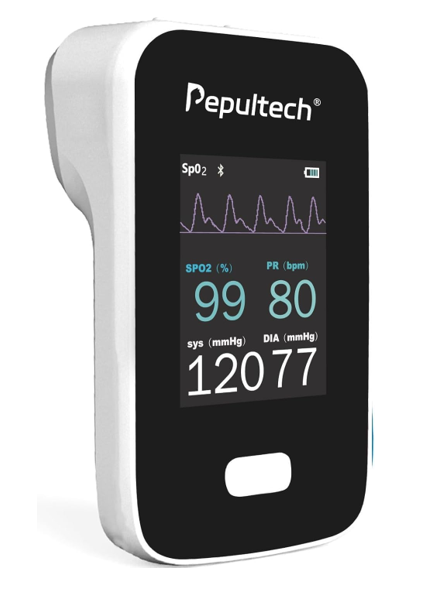
The AM6200A Bluetooth Veterinary Patient Monitor is designed to provide multiple vital-sign measurements for pet monitoring.
Key Features
- A compatible mobile application.
- Monitors blood oxygen saturation (SpO₂) and pulse rate.
- 2.8-inch display for viewing measurements.
- Bluetooth connectivity
- Designed for veterinary and home pet-care use.
Pros
- Combines several vital-sign monitoring functions in one device.
- Display provides a dedicated viewing interface.
- Bluetooth and app features may support digital tracking.
- May be useful for monitoring selected measurements over time when advised by a veterinarian.
Cons
- Multiple measurement functions may require separate probes or accessories.
- Accuracy depends on correct use and the suitability of the device for the animal.
This model may appeal to pet owners who have been advised to monitor more than one vital sign, as well as veterinary clinics seeking a multi-parameter device.
4. Veterinary Animal Blood Oxygen Monitor – Handheld Pulse Rate Monitor with Small Probe
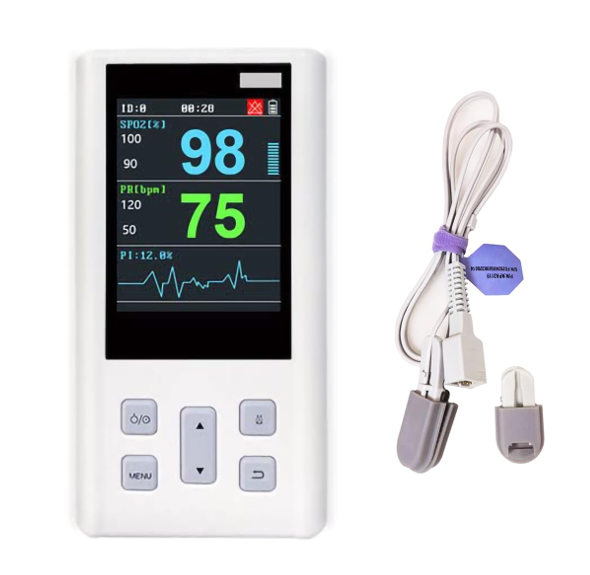
The Veterinary Animal Blood Oxygen Monitor is a handheld pulse oximeter designed to measure oxygen saturation and pulse rate in pets. It features a small probe intended for veterinary use, which may be helpful when monitoring smaller animals or accessing suitable measurement sites.
Key Features
- A 2.8 – inch TFT LCD display
- Visual and sound prompts
- 3 AA alkaline or 1800MAH
- A friendly menu for parameter adjustment
- Measures blood oxygen saturation (SpO₂).
- Monitors pulse rate in suitable animals.
- Handheld design for portability.
- Includes a small probe for pet monitoring.
Pros
- Compact and portable for use in different care settings.
- Small probe may be suitable for selected pet sizes and measurement sites.
- Provides oxygen saturation and pulse-rate readings.
- Dedicated veterinary design.
Cons
- Probe suitability should be confirmed for the specific animal.
- Movement and low peripheral circulation can affect readings.
This handheld monitor may be an option for veterinary staff or experienced pet caregivers who need basic oxygen saturation and pulse-rate monitoring.
5. AM1000A-Vet Bluetooth Handheld Pulse Oximeter with Tongue Probe
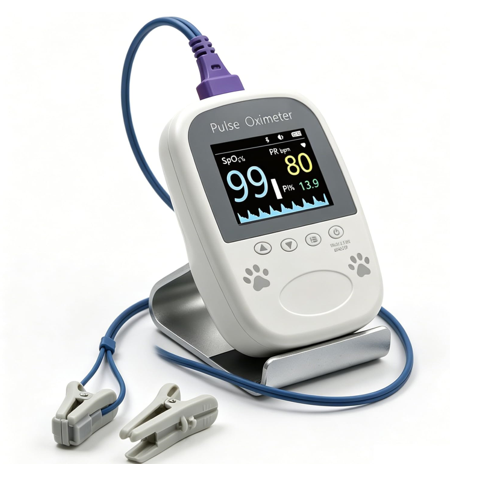
The AM1000A-Vet Handheld Pulse Oximeter is a veterinary monitoring device designed to measure blood oxygen saturation and pulse rate in pets using a tongue probe.
Key Features
- Measures blood oxygen saturation (SpO₂) and pulse rate.
- Tongue probe
- Bluetooth connectivity.
- Compatible app
- Handheld design for portability and monitoring convenience.
Pros
- Provides two important vital-sign measurements.
- Tongue probe may offer a suitable measurement option in selected clinical situations.
- Bluetooth and app-based storage may help with tracking readings.
- Portable design for use in veterinary or approved home-care settings.
Cons
- Tongue-probe use may not be practical or appropriate for every animal.
- Requires veterinary guidance for safe use and interpretation.
Buyers should also confirm how data is stored and whether readings can be exported or shared with a veterinarian.
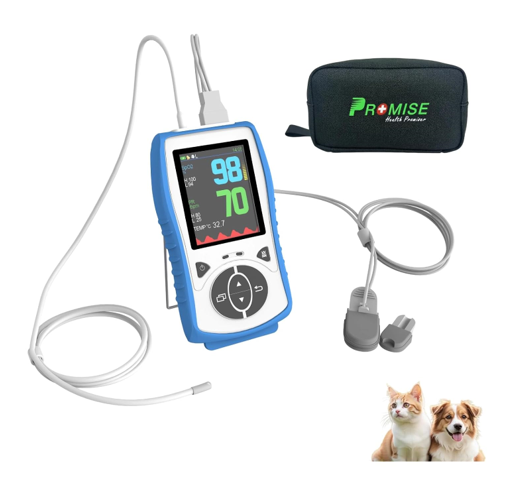
6. PRCMISEMED
Features
- 3-in-1 function model
- Lithium battery
- Weighs 1.2 pounds
- 2 sizes SPO2 clips
- 5-level sounds for button
- 3-minute automatic shut-off
- Silicon protective case and back stand
- Big font displays with 2.8″ Color TFT-LCD
Pros
- Extremely well put together and complete.
- Rechargeable
- Extremely well put together and complete.
- Suitable for health monitoring
- Additional rectal temperature probe is provided.
- Selectable menu for small/medium/big size animals
Cons
- None noted
Benefits and Uses of Pet Pulse Oximeters
Pet pulse oximeters can support veterinary assessment and monitoring by providing information about oxygen saturation and pulse rate. Their potential benefits and uses include:
- Monitoring oxygen saturation: Helps track estimated blood oxygen levels in animals when monitoring is clinically indicated.
- Checking pulse rate: Provides pulse-rate readings that can contribute to a broader assessment of a pet’s condition.
- Supporting veterinary procedures: May be used by veterinary professionals during selected procedures, sedation, anaesthesia, or recovery, as part of appropriate clinical monitoring.
- Monitoring pets with respiratory conditions: Can provide supplementary measurements for animals with diagnosed respiratory or cardiac conditions when a veterinarian recommends monitoring.
- Post-treatment observation: May help veterinary teams follow oxygen saturation and pulse rate during recovery from certain illnesses or procedures.
- Home monitoring: Selected devices may be used by trained pet owners under veterinary guidance to record readings and share them with their veterinarian.
- Digital record keeping: Bluetooth-enabled models with compatible applications may allow users to store, review, and share measurement records.
Pulse oximeter readings should always be interpreted alongside the animal’s clinical signs and other relevant assessments. A normal reading does not necessarily rule out a serious health problem.
Who Needs a Pulse Oximeter for Pets?
Veterinary pulse oximeters are primarily intended for veterinary professionals and trained animal-care providers.
They may be useful for:
- Veterinarians: To support assessment and monitoring during selected clinical procedures and treatment.
- Veterinary nurses and technicians: To assist with monitoring oxygen saturation and pulse rate as part of an established care plan.
- Veterinary students: To learn about non-invasive vital-sign monitoring under appropriate supervision.
- Pet owners caring for animals with diagnosed conditions: Those whose veterinarians have recommended home monitoring and explained how to use and interpret the device.
- Animal-care facilities: Selected clinics, shelters, or other facilities with trained staff and appropriate veterinary protocols.
A pulse oximeter is not essential for every pet owner and routine home readings are not a substitute for regular veterinary check-ups. If a pet is breathing with difficulty, has blue or very pale gums, collapses or becomes severely weak, seek urgent veterinary attention rather than attempting to manage the situation using a pulse oximeter.
How to Use and Care for a Pet Pulse Oximeter
Correct use and maintenance are important for obtaining useful readings and reducing the risk of discomfort or inaccurate results.
How to Use
- Read the manufacturer’s instructions: Check the recommended measurement sites, probe placement, and animal-specific precautions for your model.
- Keep your pet calm: Choose a quiet environment and allow your pet to settle. Movement, stress, and struggling can interfere with readings.
- Select the appropriate probe: Use a probe that is designed for your pet’s species and size, and follow veterinary guidance on the measurement site.
- Position the probe correctly: Place it gently according to the manufacturer’s instructions. Avoid excessive pressure or positioning that causes pain or restricts circulation.
- Wait for a stable signal: Keep your pet and the probe as still as possible while the device obtains a reading. Do not assume that a fluctuating or poor-quality signal is accurate.
- Record the results: If monitoring has been recommended, note the SpO₂ reading, pulse rate, time, and any relevant symptoms. Share the information with your veterinarian as directed.
- Interpret readings cautiously: Follow your veterinarian’s instructions about what readings require action. Do not delay veterinary care because a reading appears normal if your pet is unwell.
Cleaning and Maintenance
- Clean the probe and device according to the manufacturer’s instructions, using only recommended cleaning products.
- Avoid immersing the device or exposing electronic components to moisture unless it is specifically rated for that use.
- Inspect probes and cables regularly for damage, wear, or loose connections.
- Store the monitor in its protective case, away from excessive heat, moisture, and dust.
- Replace batteries or recharge the device as recommended.
- Keep reusable probes clean and dry between uses, and do not share them between animals without appropriate cleaning.
- Check the device periodically for proper function and follow any manufacturer guidance on servicing or calibration.
Stop using the device if it causes discomfort, skin irritation, or distress. Seek veterinary advice if readings are repeatedly inconsistent or do not match your pet’s clinical condition.
FAQs
Can I use a human pulse oximeter on my dog or cat?
Some human devices may display readings when placed on an animal, but they may not be validated for veterinary use. A veterinary-designed device and guidance from a veterinarian are preferable.
What is a normal oxygen saturation level for pets?
Expected readings depend on the animal, measurement site, clinical condition and equipment. A veterinarian should interpret the result in context and explain what range is appropriate for your pet. Do not use a single reading as the only indicator of health.
Where is the best place to put a pulse oximeter on a pet?
The appropriate site depends on the probe and the animal. Veterinary devices may use the tongue, ear, paw, or another suitable tissue site. Follow the device instructions and your veterinarian’s advice rather than trying different sites without guidance.
Are pet pulse oximeters accurate?
They can provide useful estimates when the device is appropriate and the probe is correctly positioned, but readings can be affected by movement, poor circulation, cold tissues, pigmentation, and other factors. A reading should be assessed alongside clinical signs and, when necessary, other veterinary tests.
Can I use a pet pulse oximeter at home?
Yes, selected devices may be used at home when a veterinarian recommends monitoring and teaches you how to position the probe, record results, and respond to concerning readings. Home monitoring should not replace veterinary examinations or urgent care.
Do pet pulse oximeters measure heart rate as well?
Most veterinary pulse oximeters are designed to estimate both oxygen saturation (SpO₂) and pulse rate. However, the displayed pulse rate may be unreliable if the signal is poor, so it should not be treated as a definitive cardiac assessment.
When should I seek veterinary care instead of using a pulse oximeter?
Seek urgent veterinary care if your pet has labored or unusually rapid breathing, blue or very pale gums, collapse, severe weakness, or sudden deterioration. Do not wait to obtain a pulse oximeter reading before seeking help.
Conclusion
The best pulse oximeters for pets provide useful supplementary monitoring of oxygen saturation and pulse rate when selected and used appropriately. Consider probe compatibility, reliability, supported animal types, ease of use, portability, and data-storage features before buying.
Veterinary guidance is essential for interpreting readings and deciding when monitoring is needed. A pulse oximeter can support pet care, but it cannot replace professional veterinary assessment or urgent treatment when a pet shows signs of distress.