
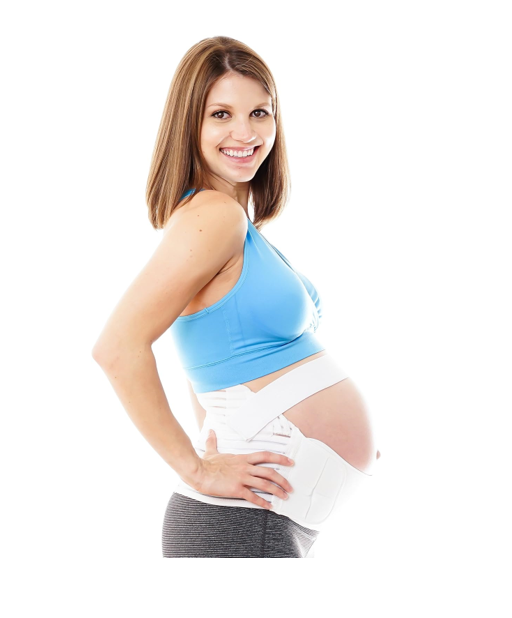
Finding the best pregnancy support belts can make pregnancy more comfortable by providing gentle support for the growing belly, lower back, hips and pelvis. A well-designed maternity support belt can help distribute the weight of the belly and provide additional stability during daily activities.
In this guide, we review popular pregnancy support belts, highlighting their features, benefits, comfort, adjustability and important factors to consider before choosing the right one.
What Is It?
A pregnancy support belt is typically made from elastic, breathable or flexible materials that wrap around or underneath the pregnant abdomen. Many models use adjustable straps or fasteners so the level of support can be modified as the pregnancy progresses.
Some designs provide basic belly support, while others are structured to provide additional lower-back, pelvic, and hip support. Certain maternity belts can also be used during the postpartum period, depending on the manufacturer’s instructions.
What to Consider Before Buying a Pregnancy Support Belt
Choosing the right maternity support belt depends on your stage of pregnancy, body size, symptoms and the type of support you need.
Here are a few things to consider;
- Size and Adjustability
Check the manufacturer’s size chart carefully. An adjustable belt can be particularly useful because the abdomen changes considerably throughout pregnancy.
- Type of Support
Consider whether you need primarily belly support or additional support for the lower back, pelvis, hips, or waist. Multi-area maternity belts may be preferable when discomfort occurs in several areas.
- Comfort and Breathability
Look for soft, flexible and breathable materials. A belt that causes excessive sweating, itching, rubbing, or pressure may be difficult to wear for extended periods.
- Level of Support
Some women prefer a lightweight belly band, while others may need a more structured maternity belt. Avoid assuming that a firmer belt is automatically better.
- Adjustability
Velcro, elastic panels, straps, or other adjustment systems can make it easier to achieve a comfortable fit as pregnancy progresses.
- Clothing Compatibility
If you plan to wear the belt underneath clothing, consider a low-profile design that will not create excessive bulk.
- Ease of Cleaning
Because pregnancy support belts can become sweaty with regular use, choose a product that is easy to wash and maintain.
- Pregnancy and Postpartum Use
If you want a belt that can also be used after delivery, check whether the manufacturer specifically recommends it for postpartum use.
Best Pregnancy Support Belts
1. Momcozy Pregnancy Belly Band
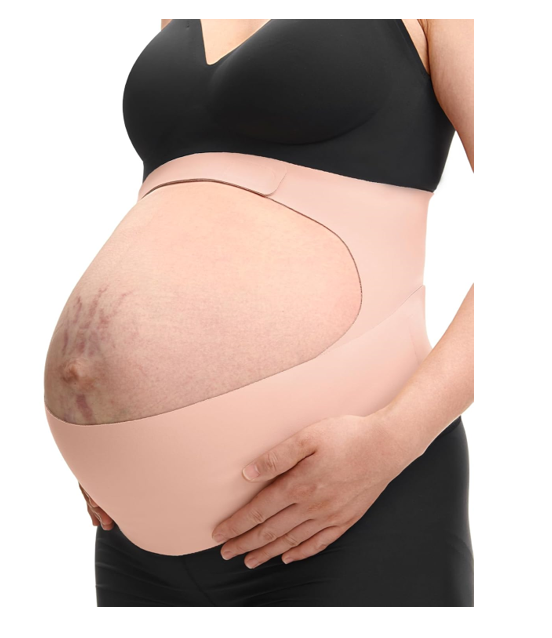
The Momcozy pregnancy belly band is designed to provide gentle support to the growing abdomen while helping reduce the strain pregnancy can place on the lower back and waist.
Key Features
- 77% polyester
- 23% spandex
- Oyster pink
- Air-hole ventilation
- Adjustable maternity design
- Ergonest support for the abdomen, waist and back
- Low-profile design
Pros
- Discreet under clothing
- Adjustable support
- Lightweight design
- Fit comfortably beneath clothing
- Comes in different sizes
- Useful for everyday activities
- Supports the growing abdomen
Cons
- May not provide sufficient support for severe pelvic pain
- Should not be worn excessively tight
The discreet design is particularly appealing to pregnant women who want support without wearing a bulky brace. Buyers looking for everyday abdominal and lower-back support may find this style convenient, although individual comfort and fit can vary.
2. ChongErfei Pregnancy Support Belt
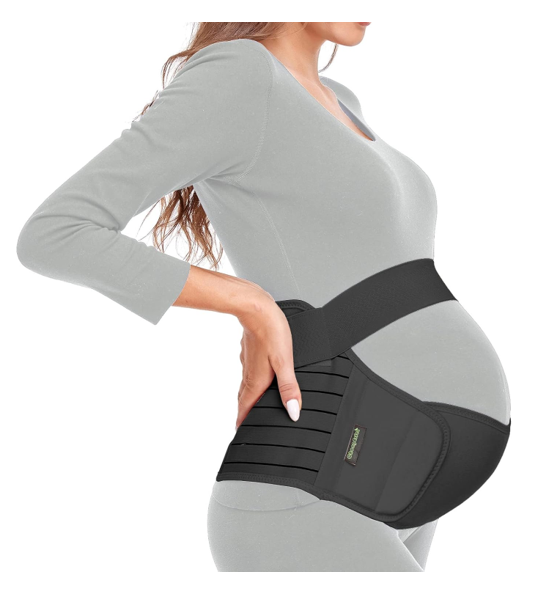
The ChongErfei Maternity Belt is a 3-in-1 pregnancy support belt designed to provide support around the back, pelvis, hips and growing belly.
Key Features
- Cotton material
- Weighs 9.6 ounces
- Measures 3.94 x 3.94 x 0.39 inches
- Hook and loop closure type
- 3-in-1 maternity support design
- Supports abdomen, back, pelvis and hips
- Adjustable construction
- M/L option listed for 35.5–47.3-inch abdominal measurement
Pros
- Multi-area support
- Adjustable fit
- Allows users to customize the fit
- Supports the growing belly
- Useful for active pregnant women
- Designed to distribute abdominal support
Cons
- May feel bulky under tight clothing
- Correct positioning is important
Users who want more than simple belly support may appreciate the belt’s multi-area design. The adjustable construction also makes it easier to customize support as the abdomen changes during pregnancy.
3. KeaBabies Pregnancy Belly Bands
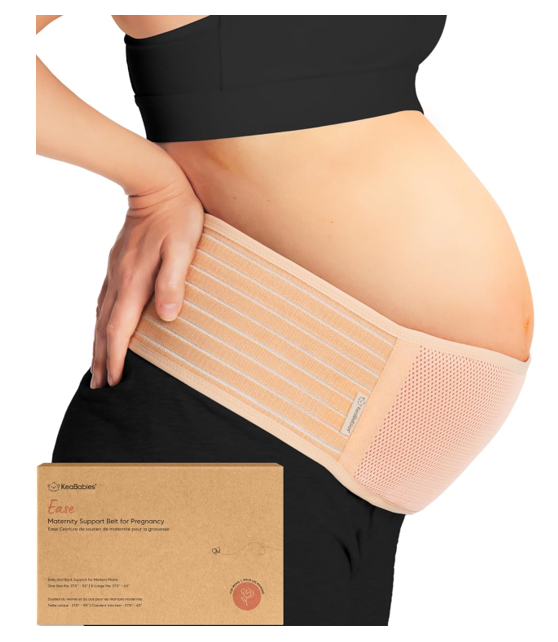
The KeaBabies pregnancy belly band combines soft, breathable material with adjustable support for the growing pregnancy belly. Its neutral ivory color and low-profile design can also make it easier to wear with different outfits throughout pregnancy.
Key Features
- Weight 0.17 kg
- Measures 45.98 x 9.45 x 0.2 inches
- M/L, belly 27.5″-45” sizes
- Posture Correction
- 360° ergonomic support
- Soft and breathable fabric
- Adjustable maternity support
- Supports belly, back and pelvis
- Hook and loop closure types
- 70% nylon, 20% polyester, 10% cotton
- Neutral classic ivory color
- Designed for everyday pregnancy wear
Pros
- Soft and breathable
- Adjustable
- Lightweight
- Comfortable everyday design
- Provides multiple areas of support
- Designed for everyday pregnancy wear
Cons
- May require readjustment during movement
- Limited support compared with more structured braces
The soft material and simple design make this option attractive to women who prioritize comfort and breathability. It may be especially suitable for everyday use rather than intensive physical activity.
4. Brkjape Plus Size Pregnancy Belly Band
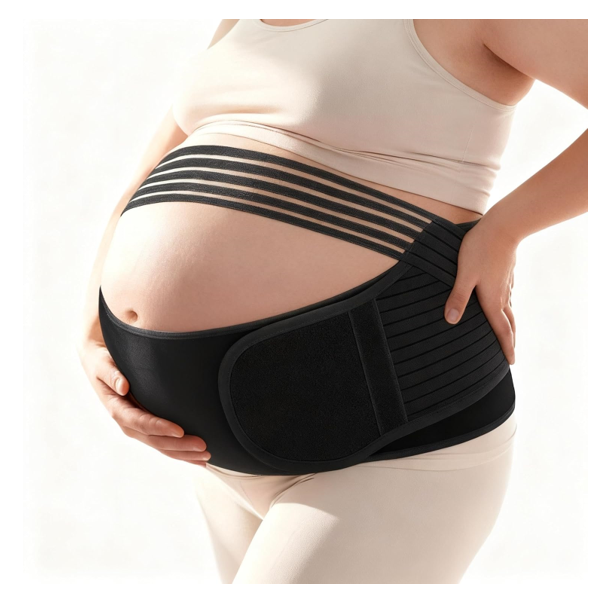
This Brkjape plus size pregnancy belly band is designed specifically for larger body sizes, with an adjustable range of approximately 43–59 inches.
Key Features
- Weighs 8.8 ounces
- Nylon, Polyester material
- Fits approximately 43–59 inches
- Supports belly, waist, and back
- Adjustable design
- Breathable material
- Suitable for 3XL/4XL users
Pros
- Wide size range
- Adjustable support
- Breathable construction
- Supports multiple areas
- Designed for plus-size pregnancy support
Cons
- May be too large for smaller users
- Correct positioning is important
- May show under fitted clothing
The wide adjustment range is the major advantage for plus-size users. Women who struggle to find maternity belts that accommodate a growing belly may appreciate having a dedicated larger-size option.
5. AZMED Maternity Belt Back Support
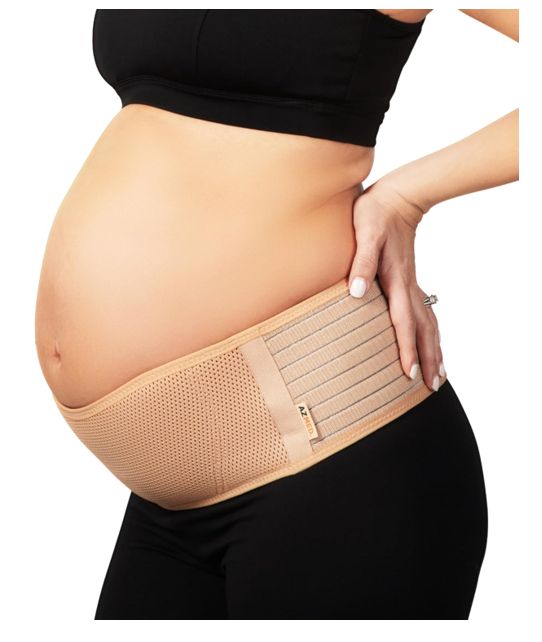
The AZMED maternity belt is an adjustable abdominal support belt designed to help support the growing belly while providing additional comfort around the pelvis, waist, and lower back.
Key Features
- Weighs 3.52 ounces
- Hook & loop closure type
- Measures 1 x 6.63 x 7.5 inches
- Adjustable abdominal support
- Fits up to approximately 46 inches
- Beige color
Pros
- Adjustable
- Designed for everyday use
- Provides abdominal and lower-back support
- Helps support the growing belly
- Lightweight maternity design
- Easy to incorporate into daily activities
- Supports belly, waist, pelvis, and lower back
Cons
- Limited size range compared with plus-size models
- May require frequent adjustment
The AZMED belt is appealing to users who want adjustable abdominal and lower-back support without choosing a highly specialized maternity brace. Its neutral color may also work well underneath lighter clothing.
6. SUPPORTSMART V3 Smart Maternity Belt
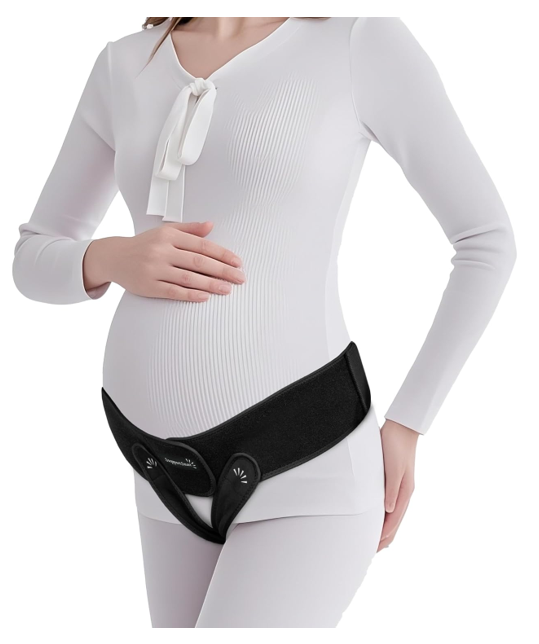
The Supportsmart V3 smart maternity belt’s multi-functional construction may be particularly useful for women experiencing discomfort in several areas rather than requiring support around the abdomen alone.
Key Features
- Weighs 0.17 kg
- Neoprene material
- 4-in-1 maternity support
- Hook and loop closure type
- Adjustable design
- Soft, breathable fabric
- Black color
- HSA/FSA eligible
Pros
- Comprehensive multi-area support
- Adjustable
- Breathable material
- Can be used during pregnancy and postpartum
- Designed for targeted pelvic and hip support
Cons
- More complex than a basic belly band
- May require careful positioning
- Individual comfort may vary
- May not be suitable for every pregnancy-related condition
The 4-in-1 design makes this option attractive to women looking for more comprehensive support than a standard belly band provides. The ability to target several areas can be useful when pregnancy-related discomfort extends beyond the lower back and abdomen.
Benefits and Uses
Pregnancy support belts may:
- Support the weight of the growing abdomen.
- Reduce strain on the lower back and waist.
- Provide additional pelvic and hip support.
- Improve comfort while walking or standing.
- Help support the abdomen during everyday activities.
- Provide gentle support during exercise or prolonged activity when appropriate.
- Make some pregnant women feel more comfortable and secure as pregnancy progresses.
- Provide postpartum abdominal support with suitable designs.
A support belt should provide comfortable support rather than tight compression. It does not treat the underlying causes of pregnancy-related pain and should not replace medical assessment when significant symptoms occur.
Who Needs a Pregnancy Support Belt?
Not every pregnant woman needs a support belt. It may be useful for women who experience discomfort associated with the increasing weight of the abdomen or who want additional support during everyday activities.
A pregnancy support belt may be considered by:
- Women with a growing or heavy pregnancy belly.
- Pregnant women experiencing mild lower-back discomfort.
- Women who experience pelvic or hip discomfort during pregnancy.
- Those who spend considerable time standing or walking.
- Pregnant women who find certain daily activities increasingly uncomfortable.
- Women looking for additional abdominal support during later pregnancy.
- Women who have been advised by a healthcare professional to use maternity support.
Women with significant, persistent or worsening pain should seek medical advice rather than relying solely on a support belt to determine whether the symptoms require further assessment.
How to Use and Care for a Pregnancy Support Belt
How to Use It
- Read the manufacturer’s instructions before wearing the belt.
- Choose the appropriate size according to the manufacturer’s measurements.
- Position the belt according to the product instructions, generally providing support underneath or around the abdomen.
- Adjust the straps or fasteners until the belt feels supportive but comfortable.
- Make sure it does not restrict normal breathing or movement.
- Wear it during activities when additional support is useful.
- Remove it if it causes significant discomfort, numbness, tingling, skin irritation, or excessive pressure.
A pregnancy support belt should never be tightened excessively. The goal is gentle support rather than strong compression.
How to Care for It
- Follow the manufacturer’s washing instructions.
- Hand-wash or use a gentle cycle when recommended.
- Avoid harsh detergents if they irritate the skin.
- Allow the belt to dry completely before storing or wearing it again.
- Check regularly for stretched elastic, damaged fasteners, or worn straps.
- Do not share personal maternity support garments without properly cleaning them.
- Replace the belt if it no longer provides a secure and comfortable fit.
FAQs About Pregnancy Support Belts
When should I start wearing a pregnancy support belt?
There is no single week when every woman should begin using one. Many women start when their growing abdomen begins causing discomfort or additional back and pelvic strain.
Can a pregnancy support belt reduce back pain?
It may provide additional support and improve comfort for some women with pregnancy-related back discomfort. However, persistent or severe back pain should be assessed by a healthcare professional.
Can I sleep while wearing a pregnancy support belt?
Most maternity support belts are intended for daytime activities rather than sleeping. Follow the manufacturer’s instructions and remove the belt if it causes discomfort or pressure.
Can I wear a maternity belt all day?
Some products are designed for extended daytime use, but wearing time varies. The belt should remain comfortable and should not be excessively tight. Follow the manufacturer’s recommendations.
Can a pregnancy support belt hurt the baby?
A properly fitted support belt should not be used to tightly compress the abdomen. It should provide gentle support. If wearing one causes pain or unusual symptoms, remove it and seek professional advice.
Can I use a pregnancy support belt after delivery?
Some maternity belts are designed for both prenatal and postpartum use. Check the specific product instructions before using one after delivery.
How tight should a pregnancy support belt be?
It should feel supportive but not restrictive. You should be able to breathe and move comfortably, and it should not cause numbness, tingling, pain, or impaired circulation.
Conclusion
Pregnancy support belts can provide useful belly, lower-back, pelvic, and hip support as the body changes during pregnancy. The best choice depends on your size, comfort preferences, required level of support, adjustability, and intended use.
Look for a breathable, properly fitting design that provides gentle support without excessive compression. Remember that maternity belts are designed primarily for comfort and support, not to treat medical conditions. Persistent or severe pregnancy-related pain should always be evaluated by a qualified healthcare professional.